Showing posts with label homebirth week. Show all posts

1.27.2011

home birth week : wife vs. mother: a father's perspective, by Brian Swan


I have to admit that when Rachel told me she wanted to give birth to Sela at home, I didn't know how to react. I was surprised and concerned. I had always assumed that my life would follow the television cliches of birth; packing an overnight bag, planning a route to the hospital, and rushing out the door in pajamas in the middle of the night. Giving birth anywhere else hadn't ever occurred to me, and there were a couple more people that I was pretty sure had never had that idea either: my parents.

After taking a couple of weeks to wrap my mind around the idea, I approached my parents to drop the homebirth bombshell. In retrospect I can say that I did this much too soon, because I still wasn't sure that it was the best thing for my wife and unborn child. I mentioned that we would be having the baby at home as casually as I could, hoping that it would be accepted before anyone really realized what had been said. I knew my parents had heard, though, when I saw that my mom's eyes were the size of saucers. "I don't think that's a very good idea." she said when she had had a moment to calm down.

I repeated the thing that I had been using to reassure myself, "The hospital is only two miles away."

"If you hadn't been born in a hospital, you would have died!"

I shrugged. It was all I could do. I knew I had been sick when I'd been born and I really didn't have any way to reply to that.

Never one to jump into something without testing the water, my dad asked "How do you feel about it?"

That felt less like a question and more like somebody pulling aside the curtain while I was showering - I suddenly felt very exposed and uncomfortable. Truth was, I didn't know how I felt. I wanted to be supportive but I was scared that something would go wrong and that Rachel and I would forever blame ourselves for having made a decision that led to the loss of our baby. "I don't know," I said quietly.

"I think we're talking to the wrong person, then." Mom said.

"No, let me handle it." I replied.

I left my parents' house feeling like Rachel and I were making the worst decision of our lives and wondering how and if I would be able to put my foot down and insist on a "normal" hospital birth. I thought about what they had said about me being so sick when I was born, and how terrified I was of the same thing happening to our baby. It was much later in the pregnancy that I realized that the only place I could have contracted a disease was in the hospital. I began to wish that I had waited to talk to my parents so that I could have told them that if I hadn't been born in the hospital I wouldn't have died - that I probably wouldn't have ever been sick. I wished that I had been more supportive and trusting of Rachel's decision and known that she wouldn't decide to do something that affected her and our baby without thoroughly researching it and knowing the risks.

But it was too late.

After meeting with our midwife, Diane, I felt much better about the whole idea and was ready to have a homebirth.

My mom never made it that far.

The day finally arrived that Rachel went into labor, and I was surprisingly relaxed as we started putting the plans we'd made into action; I got a bed ready for Diane, hooked a hose up to the hot water in the laundry room so that we could fill the birthing tub, and followed Rachel as she paced around the house, annoyingly offering to get her anything she needed over and over again. I called my parents to tell them that labor had started, and they called a couple of times that night for updates.

Labor took a lot longer than I had thought. I wished that I could help speed things up or at least help Rachel get some rest. I could see that Diane was beginning to worry about Sela and Rachel as she furrowed her brow each time she took Sela's heartbeat. Diane put Rachel on oxygen and said it was time to get out of the tub and start pushing. At that exact instant our front door opened and it was my turn to have saucer-sized eyes; my mom had come to end the "hippy ritual" and get her granddaughter to a hospital.

Luckily, Diane wasn't in the mood to chat and she pointed at my mom and told her that she was helping. My mom helped to support Rachel as Sela was born. She hadn't supported our decision and hadn't been invited, but I was glad she came when she did. I haven't talked to her too much about homebirth since, but I know that she was surprised to see the professional care and personal support that Diane, Briana, and Liz gave to Rachel and Sela. She stayed for an hour or two after the birth to help clean up and took a load of laundry home with her.

The time leading up to Sela's birth was surreal; on the one hand I had a strong and knowledgeable wife and her incredibly supportive family, friends, and midwife, on the other I had the friction and difficulty of winning my parents' respect and support of the decision that we'd made and of convincing myself that it was right. I couldn't have asked for a better resolution. The panic that I felt when my mom burst through our front door had been completely replaced with peace and happiness by the time she took the bundle of wet towels and rags home with her.

It may seem odd that so much of my first child's birth revolved around my mother, but at the time I felt stretched between the scientific logic of my mother and the peaceful decisiveness of my wife. I went into the experience with all of the concerns that my mom had voiced and left it knowing it was exactly what Rachel, Sela, and I needed to do.

Sela's birth did something else; it built upon the feeling of "home" that I felt in that little basement apartment. Every day I would be reminded of Rachel laboring calmly in the birthing tub, of kissing the back of Rachel's neck and whispering in her ear as she pushed, and of seeing Sela's scrunched-up face and hearing her cry for the first time. I would remember all of these things because it happened right there, in our apartment where we lived and laughed and loved every single day.

Had you told me five years ago that I would be such a staunch supporter of homebirth, I would have laughed until I turned blue. But I have since become quite the advocate of homebirth and I don't doubt that most of my coworkers and friends are tired of hearing me blather on about how much more peaceful a homebirth is than in the hospital, how it can be just as safe as a hospital birth, how I recommend they look into birthing centers if they're not sure about a birth at home, and how I push Birthing From Within like it's an old Buick and I'm a used car salesman. I am now convinced that more people need to know that the hospital isn't the only option and that they can have a safe and healthy baby in the peace and comfort of their own home.

Thank you, Brian for sharing such a sweet perspective of our shared story. I feel so lucky to have this guy as my partner in making and bringing our babies into the world. We make a pretty great team, if I do say so myself. :)

1.26.2011

home birth week : q & a, part two

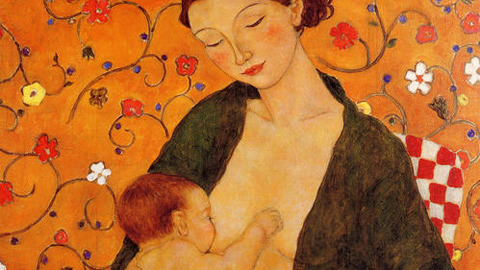
gorgeous image from radio canada via leigh's brilliant tumblr, the bean and the bear.


What is a doula?

A doula is a woman who provides non-medical support and care to a woman in labor. Doulas are trained in different laboring positions to help cope with pain, relaxation techniques, and massage. Doulas also act as advocates for their clients, making sure the woman's wishes + needs are met, acting as a buffer between the medical staff and the mother. Doulas also help encourage the father or partner to be as involved in the birthing process as they feel comfortable, providing information and acting as ally.

How do you feel about having older children present during a home birth?

I have been thinking a lot about this topic recently and I really believe that it depends on the age of the children and the number of adults present at the birth. When I had Graham, Sela had just turned two and was very curious about how the baby was going to come out. I had wanted to try  to have her present for the birth, but it just didn't work out. I was too focused on working through contractions and needed Brian's attention and support, so she spent the night at my aunt's house which is right around the corner. When she woke up the next morning, my aunt brought her over just in time for the newborn exam, and I felt it worked out well.

When I was talking to Briana about this topic last week, she said the key to having a successful experience is to have one adult for every child present, not counting the mother or father. I feel this is a great rule of thumb, especially if the labor runs long and the kids are feeling restless or anxious.

I'm hoping with the the next baby my children will be able to watch the birth, as I feel it's important for children to understand that birth is a normal, safe, and important event. Birth is an intense experience, not to mention messy and sometimes loud, but it is also a natural and normal experience, and I think the more exposure we can give our children, the more prepared and confident they will be as they go on and make their own choices.

What kind of pain management did you use?

I've never taken any childbirth classes or used any specific method to help me cope with the pain of labor, so I can't really vouch for any program specifically.

Here are the three things that helped me the most:

1) Yoga. I started practicing yoga regularly just months before I found out I was pregnant with Sela and continued my practice through both pregnancies. In yoga you are constantly using breath and meditation to help cope with physical discomfort and negative, discouraging thoughts. You learn to breathe through anything and to focus on letting go and embrace the experience for what it is. I used deep yoga breathing and even yoga poses to help me work through the contractions. It really helped my to accept the contractions and  to stop fighting against the important and necessary work they do by recognizing and saying to myself, "This is me. This is just my body giving birth. This is me."

2) Education. The more I know, the less I fear. I read (and continue to to read!) stacks and stacks of books, articles, and studies on childbirth. I watched videos of home births and talked to midwives, mothers, and doctors about the stages of birth and what to expect. I knew that with a home birth there is no option for a medicated birth, and so I made sure I was prepared long before labor began.

3) Support. I truly believe you can accomplish anything if you are surrounded by people who love you and are fully invested in supporting you through the journey of natural childbirth. It still brings tears to my eyes when I think of the tender hands and hearts that served me so tirelessly during the birth of my children. I can still remember the gentle words of encouragement whispered at the moment I thought I could go no further, "Rachel, you are doing a beautiful job. You are strong, even stronger than you know. Let's have a baby."

Ultimately, my support system gave me something I never could have achieved on my own: the beautiful, powerful and sacred experiences of bringing my children into the world on my own terms and in my own way.They made it all possible and then turned around and showered me with praise and love, giving me all the credit for something that I could have never, ever done alone.

home birth week : q & a, part one

super sweet belly picture by the lovely andrea of hula seventy


What made you choose home birth?

There are a lot of different factors that went into my choice, many of which I shared on Monday.  My initial decision was based on my desire to create a positive, safe birth experience for me and my family, and I felt that in order to have control over my environment and body, I had to be in my own home.

I have spent countless hours reading and researching home birth, not to justify the choices I've made, but because I truly believe that women have a right to know what their options are and the benefits and risks involved in whatever birth they choose.

Did you know that the United States is ranked 33rd for infant mortality? It is safer to give birth in Cuba, Singapore, and Slovenia than it is to give birth in the United States. Doesn't that seem impossible? We have a country full of shiny clean hospitals that are staffed with trained medical professionals, AND we pay more for the care we receive than anywhere else in the world, yet somehow we are failing to keep mothers and babies safe.

When I was pregnant with Sela the cesarean rate for first time mothers was 38% at my local hospital and the national rate was 30.8%. These numbers are a result of a cycle of interventions that can be absolutely unnecessary and can make it impossible for a woman to feel in control of what is happening to her body.

I'm sure we have all heard groups of women talking about induction dates and how their doctors won't let them go past a certain date before they will induce labor. I have heard of doctors who have induced women because of upcoming holidays, family vacations, and even because it is just more convenient for the doctor if their patients give birth in the early afternoon.

Once labor is induced artificially through the use of pitocin, a synthetic form of oxytocin, your body can no longer regulate labor normally. Oxytocin is released in bursts, causing normal contractions to be irregular as labor begins, but makes it easier for women to rest between the contractions and handle the intensity of labor as it progresses. Oxytocin not only causes uterine contractions, but also sends a signal to your brain to release endorphins and adrenalin to help you cope with the intensity and pain of labor. Pitocin-induced contractions are stronger and typically closer together, causing a decrease of uterine blood flow which reduces the amount of oxygen the baby is getting. There is a decrease of uterine blood flow with natural contractions as well, but the duration and strength of the contractions are much shorter and the natural breaks between contractions protect the baby.

Because of these risks, all women who are given pitocin are also hooked up to a fetal monitor which greatly limits their movement, usually confining them to a hospital bed. When you couple painful artificial contractions with the inability to move freely to cope with the pain, it is easily understandable why many women choose to have an epidural.

Once women have been given an epidural and can no longer feel the pain of labor, their bodies stop producing oxytocin and the natural contractions slow down dramatically. This is when the doses of pitocin are increased, causing fetal distress and increasing the likelihood of a previously unnecessary c-section.

I know this isn't everyone's story and the last thing I want to do is give an inaccurate template for hospital birth. Babies are born in many different ways, and no woman has ever taken the easy way out when it comes to bringing babies into this world. I also know that pitocin and cesarean sections are important life-saving tools and I'm grateful for modern medicine and the knowledge and skill of obstetricians. I do, however, know many women who can call this story their own, and I have watched as they have processed these experiences that left them feeling confused, violated, and uninformed.

I could go on and on about why I made the choice I did, but all I can really tell you is that I know home birth with a trained, certified midwife to be a safe and beautiful experience, and was absolutely the right choice for my family.


What about circumcision?

Brian and I made the decision not to circumcise Graham, so I don't have first hand experience with this topic. However, I know you can make an appointment at the hospital and have the circumcision performed there in the days following the birth.


What are your thoughts on water birth?

I love it! I spent a lot of time in water during both of my labors, and I gave birth to Graham in my bath tub. I personally find the warm water to be very soothing and an effective tool in pain management.

How much does a home birth cost and does insurance cover any of the costs?

A home birth costs anywhere from 2-5k, depending on where you live or what your midwife offers in her practice. Many insurance companies will cover a portion of the costs, or even have a list of approved midwives they work with.


When is a good time to cut the cord?

I don't think there is any hard and fast rule on this. In hospital births, the cord is cut very quickly after birth, usually just seconds after the baby is born. I know some midwives wait until the cord has stopped pulsating, which signifies that the placenta is no longer sending blood to the baby. We waited about 2 hours after Graham's birth before we cut the cord (the placenta had been delivered intact just a few minutes after he was born) so he could benefit from the extra iron stores in the cord blood.


And that's all I've got for you today, kids! I'll post the rest of the q & a tomorrow, so make sure to check back. How is home birth week going for you guys? I'm completely overwhelmed by the kindness + positive feedback from all of you! Women are the best! Hope your Wednesday is awesome and I'll see you tomorrow! xoxoxox